
Asmandia family in Cardedeu since 1571
The history of Manso Esmandia, or Ca l’Esmandia, appears to trace back to the 15th century, when the Asmandia family is mentioned in some documents in Cardedeu. Among the oldest references, the one from 1571 stands out: ‘Pere Asmandia de la Coma, son of Jaume Asmandia and Margarita Muller’ Since then, and over the centuries, the farmhouse has adapted to each era without losing its identity or its link to the land of the Vallès Oriental region.
Asmandia family in Cardedeu since 1571
The history of Manso Esmandia, or Ca l’Esmandia, appears to trace back to the 15th century, when the Asmandia family is mentioned in some documents in Cardedeu. Among the oldest references, the one from 1571 stands out: ‘Pere Asmandia de la Coma, son of Jaume Asmandia and Margarita Muller’ Since then, and over the centuries, the farmhouse has adapted to each era without losing its identity or its link to the land of the Vallès Oriental region.
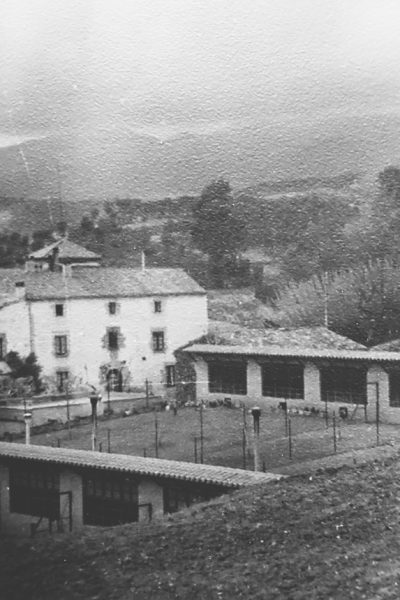
The architectural ensemble of Manso Esmandia was formed over time as a result of successive extensions and renovations that left their mark on every corner.
It features a roofed area of approximately 700 m², not counting the warehouses and several areas still awaiting renovation The irregular walls and the slight misalignment of the windows are natural traces of traditional construction. The lateral wings of the gallery and the rear section of the old stables were added in the early 20th century, while the dairy, barn and chicken coops date back to the 1930s.
Its main structure comprises a solid ground floor, a piso noble (main/first floor) that signals the building’s importance, and an attic peeking out under a gabled roof. On the façade, the voussoir doorway and stone windows—some decorated with 16th-century ogee arches—tell the story of the building’s historical origins and its enduring presence through the centuries.
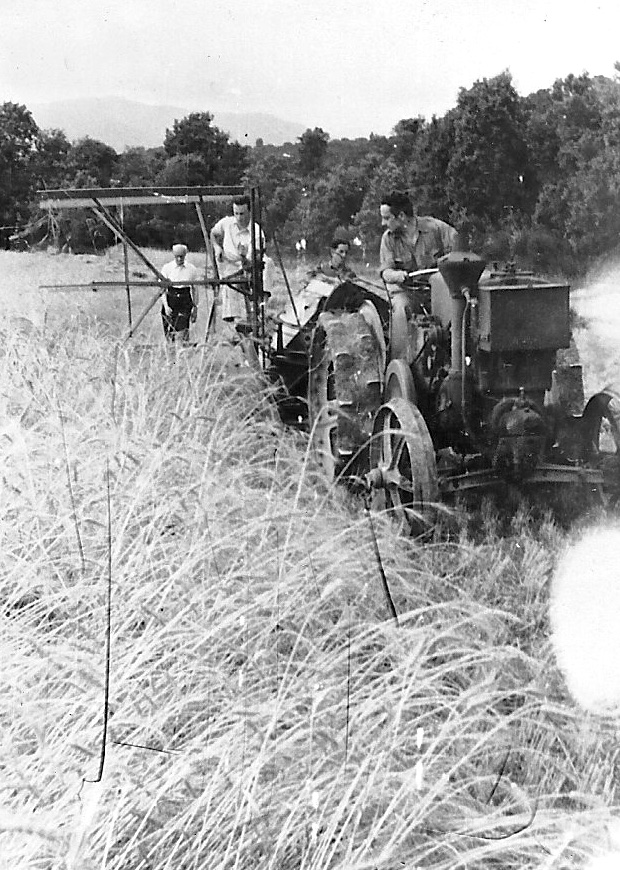
The Family
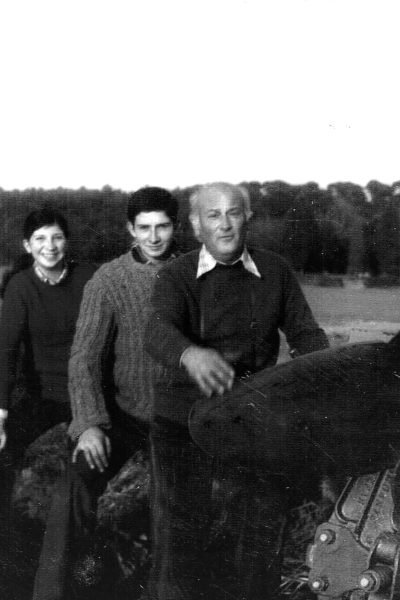
As is the case with many Catalan farmhouses, the estate was historically tied to the surrounding lands of the family property, the size of which varied over successive hereditary transfers. Around 1848, the property was acquired by Jaime Francisco Llibre i Sala, a shipowner from Sant Vicenç de Llavaneres and a member of the Llibre family of Cardedeu. He was married to Semproniana Mora Grciós, and they had six children: Magdalena, Semproniana, Candelaria, Gertrudis, Francisco and Antonio.
The siblings lived in the farmhouse, except for Antonio, until 1917, the date of the death of Semproniana Llibre, the last surviving sibling, who had no direct descendants.
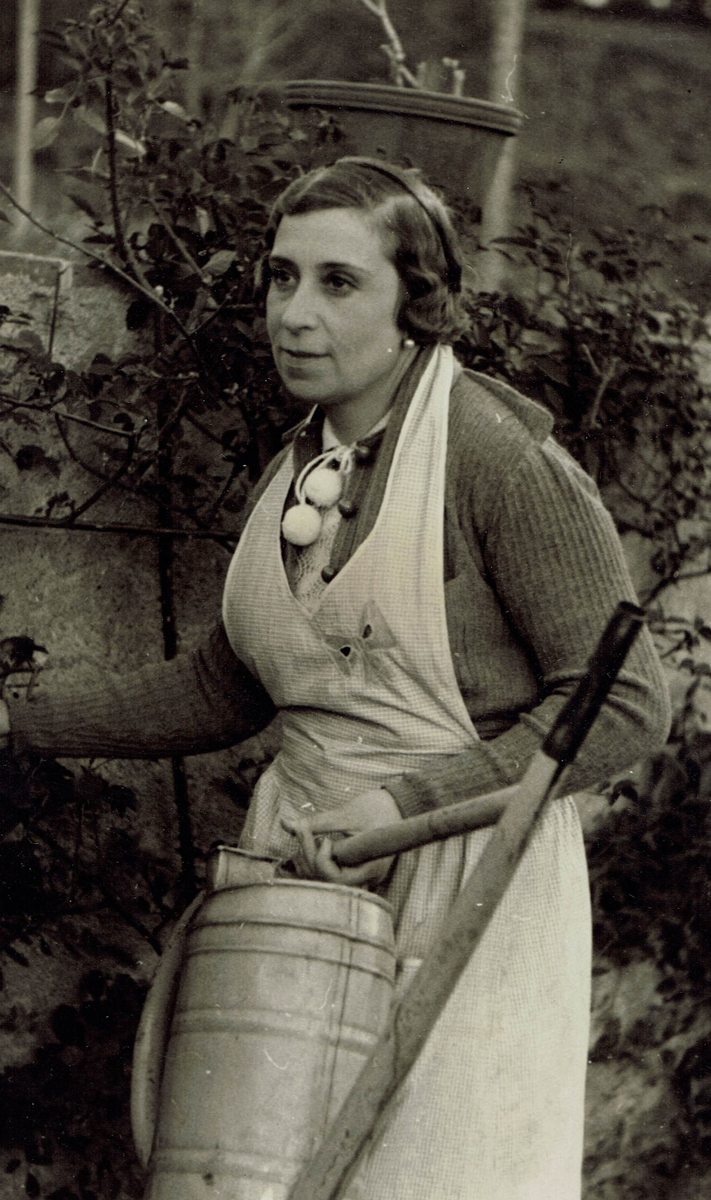
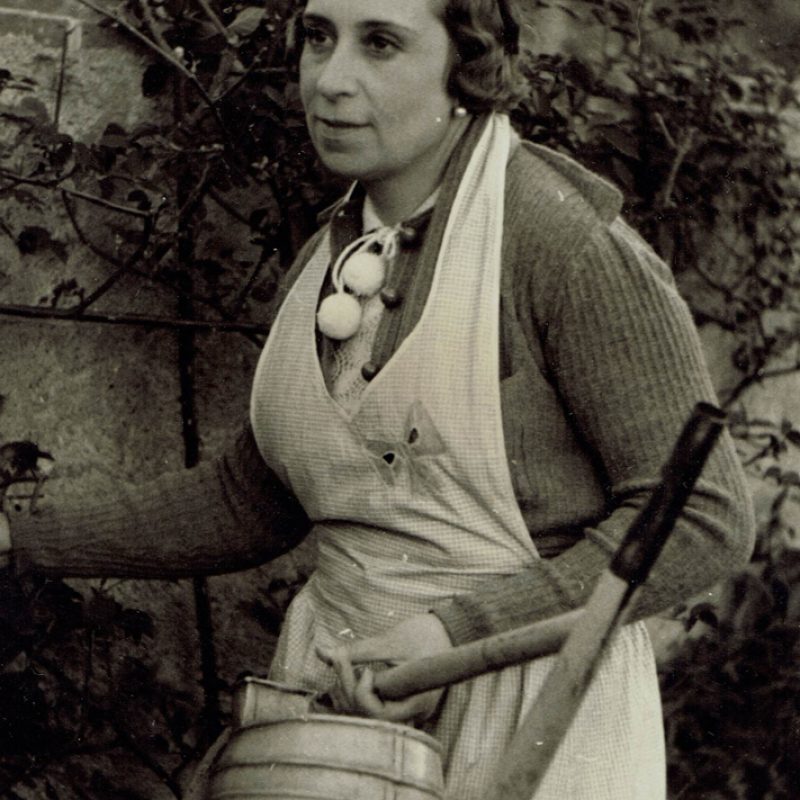
Antonio Llibre Mora married Margareta Massana Manenwith whom he had a single daughter: Carmen Llibre Massana, born in Cardedeu in 1893 and the sole heir to the estate—our grandmother. Joaquim Regàs Albinyanaundertook significant improvements to the estate, including the establishment of a poultry farm in the 1940s. They also recovered previously leased lands and ensured the continued preservation of Manso Esmandia In documents from the last century, the name Ca l’Esmandia evolved into Manso Esmandia or Mas Esmandia,names that highlight its character as a traditional agricultural estate. The term mansus, of Latin origin, means “rural property”, while Can / Ca n’ refers to the “house of a family”. Furthermore, the form “Manso Esmandia” helps to differentiate it from Ca l’Esmandia de Cànoves.
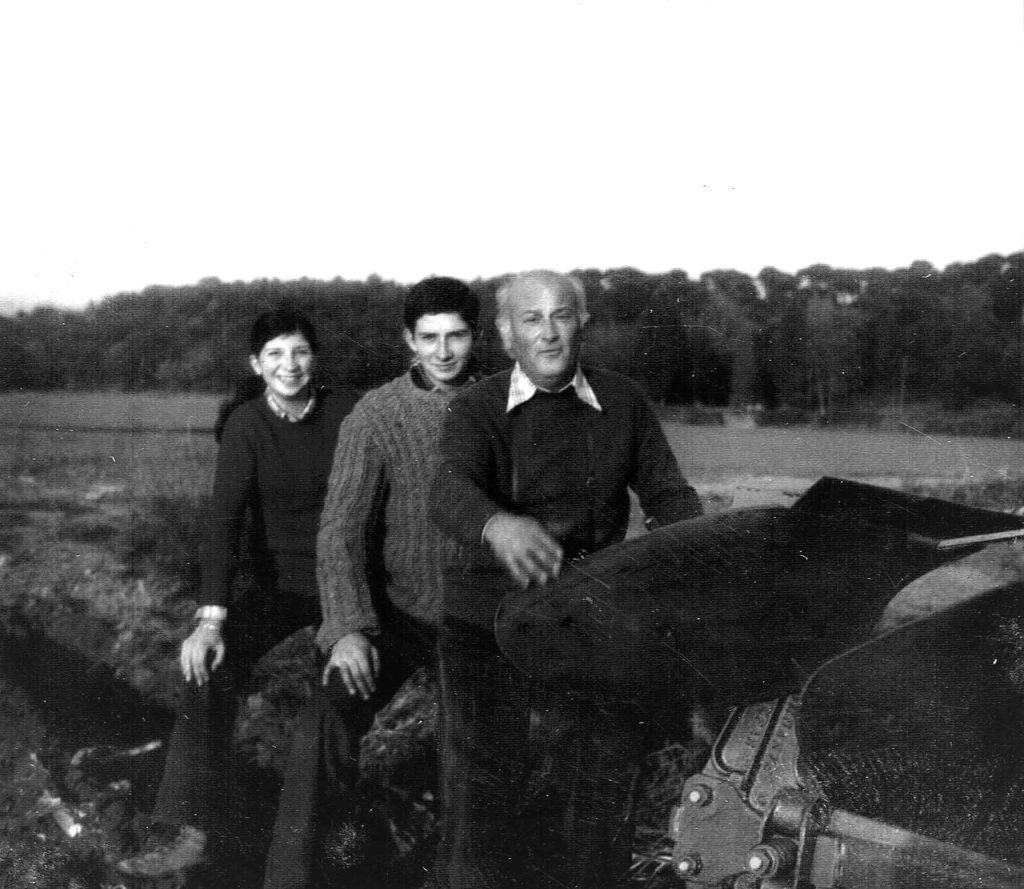
The Family
As is the case with many Catalan farmhouses, the estate was historically tied to the surrounding lands of the family property, the size of which varied over successive hereditary transfers. Around 1848, the property was acquired by Jaime Francisco Llibre i Sala, a shipowner from Sant Vicenç de Llavaneres and a member of the Llibre family of Cardedeu. He was married to Semproniana Mora Grciós, and they had six children: Magdalena, Semproniana, Candelaria, Gertrudis, Francisco and Antonio. The siblings lived in the farmhouse, except for Antonio, until 1917, the date of the death of Semproniana Llibre, the last surviving sibling, who had no direct descendants.
Antonio Llibre Mora married Margareta Massana Manen, with whom he had a single daughter: Carmen Llibre Massana, born in Cardedeu in 1893 and the sole heir to the estate—our grandmother. Over time, Carmen and her husband, Joaquim Regàs Albinyana, undertook significant improvements to the estate, including the establishment of a poultry farm in the 1940s. They also recovered previously leased lands and ensured the continued preservation of Manso Esmandia.
In documents from the last century, the name Ca l’Esmandia evolved into Manso Esmandia or Mas Esmandia, names that highlight its character as a traditional agricultural estate. while Can / Ca n’ refers to the “house of a family”. Furthermore, the form “Manso Esmandia” helps to differentiate it from Ca l’Esmandia de Cànoves.
Starting in the 1860s and coinciding with the arrival of the railway, Cardedeu experienced notable growth as a summer resort town. During the 20th century, the town hosted important architectural and social landmarks, such as the Gran Casino (1924) and the aeronautical exhibitions of 1930.
In this context, the estate played an active role in the local economy and life: farm managers, agricultural workers, warehouses, vineyards, orchards, forests and various machinery formed a functional whole, closely integrated into the dynamics of the municipality.
Today, Manso Esmandia has been listed as a Cultural Asset of Local Interest (BCIL) and is included in the Inventory of Architectural and Urban Heritage of Cardedeu. The restoration of the complex combines respect for the original materials and details, with improvements that allow for new uses: events, weddings, film shoots, meetings—all without losing its essence as a family home.
Every corner—centuries-old trees, furniture, tiles, and objects— preserves a fragment of its accumulated memory.
And this is how Manso Esmandia continues to evolve as a living, authentic space, cared for and prepared to welcome new generations and new stories.
WhatsApp us
